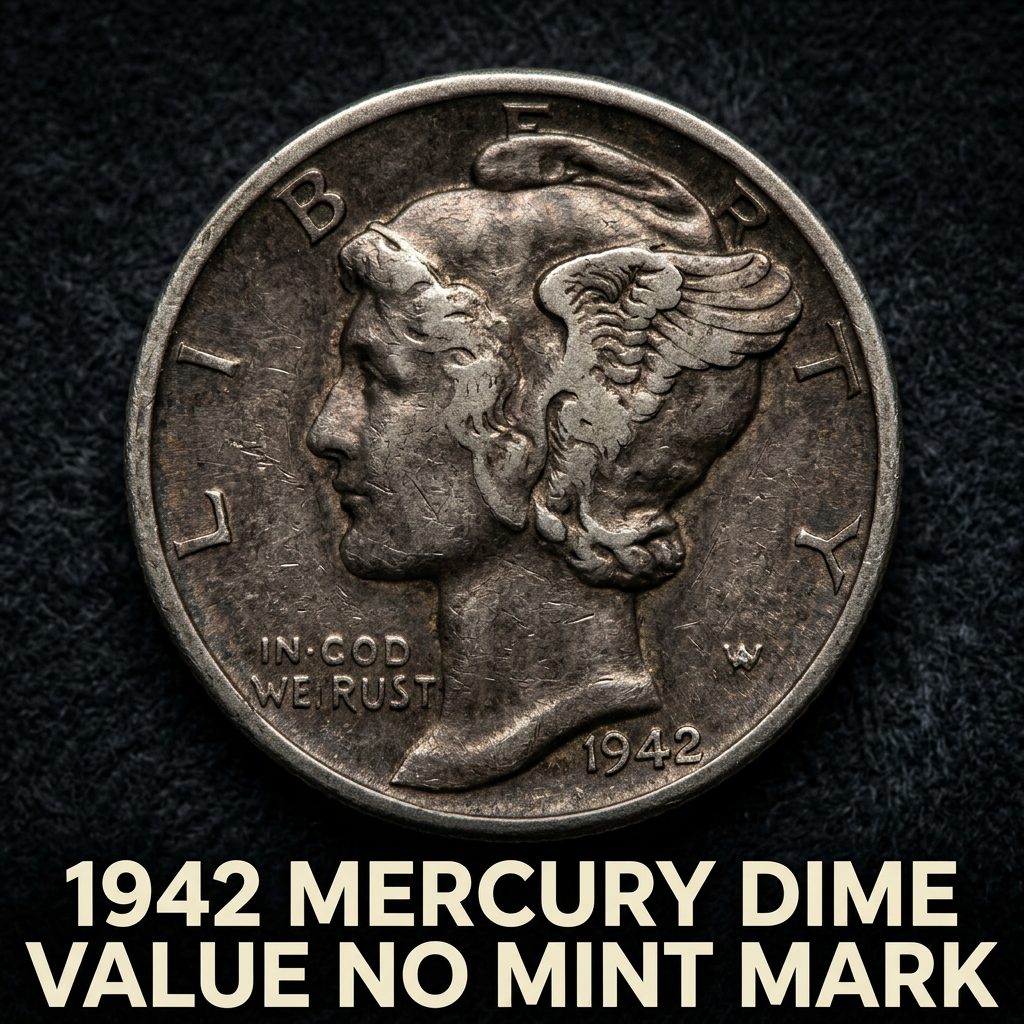
The 1942 Mercury Dime without a mint mark is generally worth between $2 in heavily circulated condition and over $50 in high-grade uncirculated condition. These beautiful silver coins are common finds in old jars or inherited collections, offering a perfect entry point for new hobbyists to discover the world of numismatics.
How to Identify a 1942 No Mint Mark Mercury Dime
If you are looking at your coin and cannot find a small letter near the bottom, don’t worry—you have a coin struck at the Philadelphia Mint. While San Francisco used an “S” and Denver used a “D,” Philadelphia left the space blank in 1942. This year was historic for the United States, as the country was ramping up its industrial might during World War II. Because Philadelphia produced so many of these dimes (over 205 million), they are very common today.
Before you assume your coin is just pocket change, it is important to verify its authenticity and condition. You can use a free coin identifier app to quickly confirm the variety and date of your find. Holding a piece of 1940s history is exciting, especially when you realize that every 1942 dime is made of 90% silver. If you are unsure if you have a genuine Mercury Dime, the CoinHix app can help you compare your coin against high-resolution archive photos.
Understanding the Silver Content and Melt Value
One of the main reasons everyday Americans hold onto these coins is their silver content. Each Mercury Dime contains about 0.07234 troy ounces of pure silver. This means even if the coin is completely “slick” or worn down to the point where the Lady Liberty image is barely visible, it still has “intrinsic value.” The price of silver fluctuates daily, but a silver dime will always be worth significantly more than its ten-cent face value.
For those who find a handful of these in an old drawer, calculating the total value becomes a fun weekend project. While most circulated examples sell for their silver weight plus a small premium, a coin in pristine condition is a different story. Professional collectors look for “Full Bands”—crisp, horizontal lines on the bundle of rods on the back side. If your coin has these, the 1942 Philadelphia Mercury Dime auction records show that prices can jump into the hundreds or even thousands for rare “Mint State” specimens.
1942 Mercury Dime Price Chart
To help you understand what your coin might be worth at a local coin shop or online, we have compiled a price guide based on the standard grading scale. Remember that “Good” means heavily worn, while “Uncirculated” means the coin looks like it just left the mint.
| Condition / Grade | Estimated Value (USD) |
|---|---|
| Good (G-4) | $2.15 – $2.50 |
| Fine (F-12) | $2.75 – $3.50 |
| Extremely Fine (XF-40) | $4.50 – $6.00 |
| Uncirculated (MS-60) | $10.00 – $18.00 |
| Choice Uncirculated (MS-65+) | $35.00 – $150.00+ |
The Famous 1942/1 Overdate Error
While the standard 1942 Philadelphia dime is common, there is a legendary “Holy Grail” error that collectors dream of finding. This is known as the 1942/1 overdate. Due to a mistake at the mint, a 1942 die was struck over a 1941 die. If you look closely at the date with a magnifying glass, you might see a clear “1” tucked behind the “2.”
Even in poor condition, this error coin can be worth $400 or more. If you think you’ve spotted this rare anomaly, using the CoinHix app to zoom in on the date can save you hours of squinting. You can also research more detailed 1942 Mercury Dime value and error descriptions to see if your coin matches the known patterns of this valuable variety. It is one of the most sought-after errors in the entire Mercury Dime series.
Tips for Preserving Your Silver Dimes
If you discover a shiny 1942 dime, your first instinct might be to scrub it clean with soap or baking soda. Stop! Cleaning a coin is the fastest way to destroy its collector value. Numismatists prefer the natural “patina” or toning that builds up over eighty years. Even small scratches from a cloth can reduce a high-grade coin’s value by 50% or more.
Instead, handle your coins by the edges to avoid getting finger oils on the faces. Store them in PVC-free plastic flips or simple paper envelopes designed for coin storage. If you want a digital way to organize your growing collection, the CoinHix mobile app allows you to catalog your coins and track their market value over time without ever risking damage to the physical silver.
Frequently Asked Questions
Q: Why doesn’t my 1942 Mercury Dime have a mint mark?
A: Coins without a mint mark were produced at the Philadelphia Mint. At that time, it was standard practice for the main mint in Philadelphia to leave the mint mark area blank, while branch mints like Denver (D) or San Francisco (S) added their initials.
Q: Is a 1942 dime made of real silver?
A: Yes, all Mercury Dimes minted between 1916 and 1945 are composed of 90% silver and 10% copper. This makes them valuable for their precious metal content regardless of their condition as a collectible.
Q: How can I tell if my 1942 dime is the rare 1942/1 error?
A: You will need a magnifying glass or a jeweler’s loupe. Look at the “2” in the date; if you see the top and left side of a “1” protruding from underneath the “2,” you likely have the valuable overdate error. It is best to have this confirmed by a professional grading service.