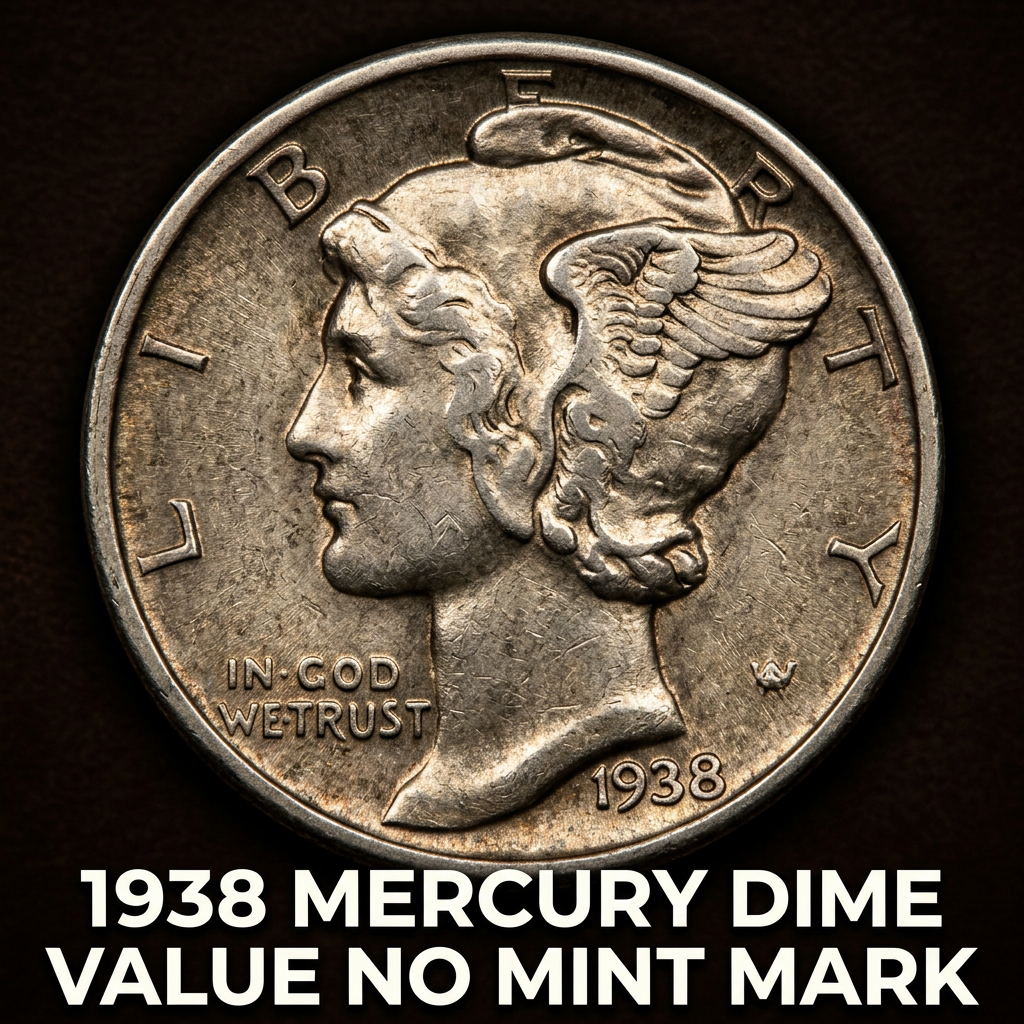
The 1938 Mercury Dime is worth anywhere from $3 in worn condition to over $110 in high-grade mint state. Most examples found in everyday change or family jars are valued primarily for their silver content, but a well-preserved specimen can fetch a surprising premium from collectors.
Understanding the Philadelphia Mint 1938 Mercury Dime
If you are looking at your old coin and see no small letter next to the date, don’t worry—this is perfectly normal. In 1938, the Philadelphia Mint produced over 22 million dimes, and like most coins from that era struck in Pennsylvania, they do not feature a mint mark. These coins are often referred to as “Plain” dimes. Determining the exact collector demand for your find is easier than ever with a free coin identifier app, which can help you distinguish between a common find and a rare variety.
While 22 million might sound like a lot, many of these coins were heavily circulated during the tail end of the Great Depression. Finding one today in “uncirculated” condition—meaning it looks just as shiny as it did the day it left the mint—is a treat for any collector. If you aren’t sure about the state of your coin, using the CoinHix app can provide a quick visual comparison to help you grade your treasure.
What Determines the Price of a 1938 Dime No Mint Mark
The primary driver of value for the 1938 Mercury Dime is its physical condition, also known as its “grade.” Because these coins are composed of 90% silver, they will always have an inherent “melt value” based on the current price of precious metals. However, the numismatic value—what collectors are willing to pay—depends on the level of detail remaining on Lady Liberty’s winged cap and the olive branch on the reverse.
For those curious about the market’s current trajectory, you can find detailed information on the 1938 Mercury Dime price trends for mint state coins. Most coins found by casual hunters will fall into the “Good” to “Very Fine” categories. These are coins that show significant wear, where the feathers on the wings or the lines on the torch appear flattened or blended. Professional tools like CoinHix allow you to scan your coin and get an immediate estimate of its potential market standing.
1938 Mercury Dime Value Chart for No Mint Mark
To give you a better idea of what your coin might be worth, we have compiled a price guide based on standard collector grades. Please note that “Full Bands” (FB) refers to a specific strike quality where the horizontal bands on the reverse torch are fully separated and distinct, a feature highly prized by enthusiasts.
| Condition / Grade | Estimated Market Value |
|---|---|
| Good (G-4) | $2.50 – $3.50 |
| Very Fine (VF-20) | $4.00 – $6.00 |
| Extremely Fine (EF-40) | $7.00 – $12.00 |
| Uncirculated (MS-60) | $20.00 – $35.00 |
| Gem Uncirculated (MS-65+) | $80.00 – $150.00+ |
Spotting Rare Varieties and Full Bands
When researching the 1938 Philadelphia silver dime worth, experts often look beyond just the date. The “Full Bands” designation is the holy grail for Mercury Dime collectors. This refers to the central horizontal bands tying the bundle of rods (fasces) on the back of the coin. If these lines are perfectly separated with no blending, the coin’s value can double or even triple.
Even if your coin isn’t a high-grade gem, it remains a piece of American history. The “Mercury” design, actually depicting the goddess Liberty in a winged cap symbolizing freedom of thought, is considered one of the most beautiful designs in U.S. coinage history. Before selling your coin to a local pawn shop, it is wise to use CoinHix to ensure you aren’t overlooking a high-grade specimen that belongs at a professional auction.
Frequently Asked Questions
Q: Does a 1938 dime really have no mint mark?
A: Yes, if the coin was minted in Philadelphia, it will not have a mint mark. If it was minted in San Francisco or Denver, you would see a small “S” or “D” on the bottom left of the reverse side, near the word “ONE.”
Q: Is the 1938 Mercury Dime made of real silver?
A: Absolutely. All Mercury Dimes minted between 1916 and 1945 are made of 90% silver and 10% copper. This gives them a “base” value that rises and falls with the silver bullion market.
Q: Should I clean my 1938 dime to make it worth more?
A: No! You should never clean collectible coins. Cleaning creates microscopic scratches on the surface that professional collectors can easily spot, and it can reduce the value of a coin by 50% or more instantly. Keep it in its original condition.