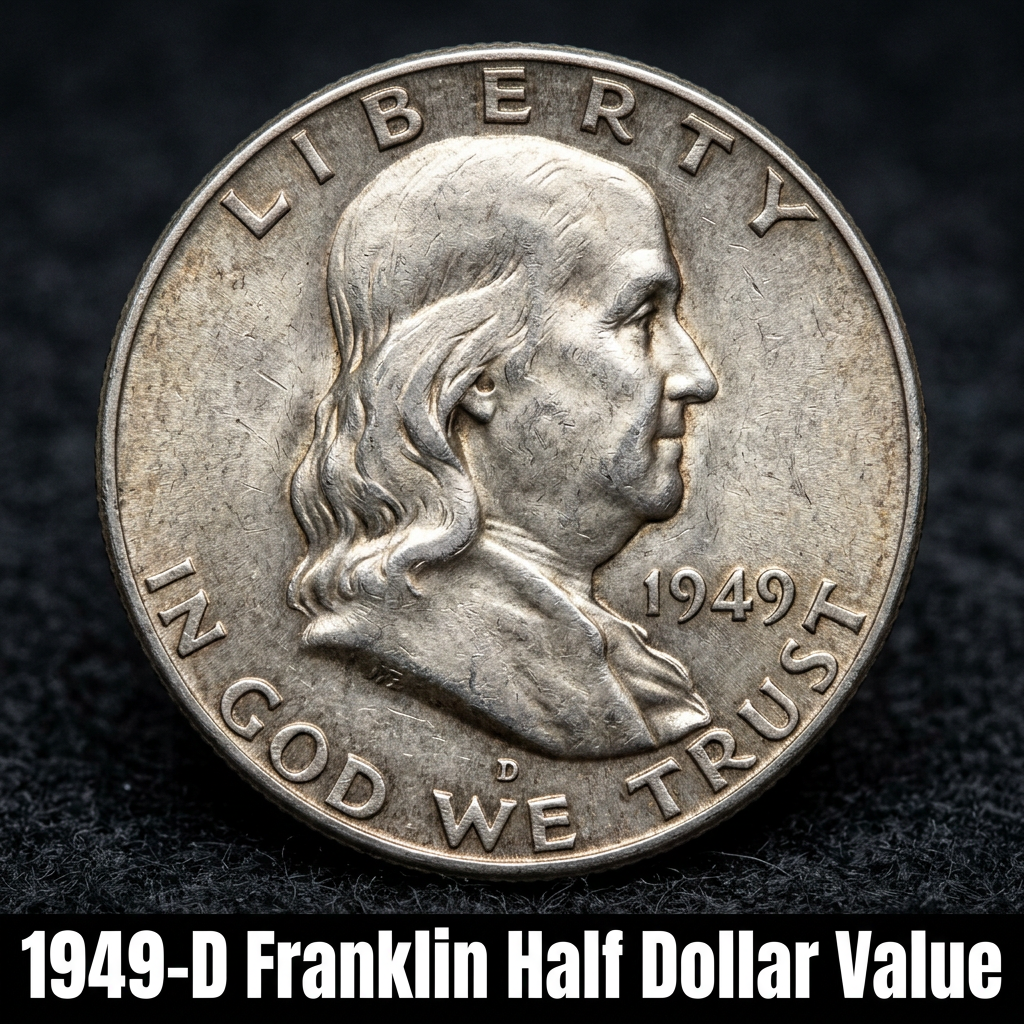
The 1949-D Franklin Half Dollar is worth anywhere from $15 in worn condition to over $1,200 in high-grade mint state. Whether you found this silver coin in an old jar or inherited it from a family collection, its value is driven by both its historical significance and high silver content.
History and Identity of the 1949-D Franklin Half Dollar
The Franklin Half Dollar series is a favorite among American collectors because it broke the tradition of featuring mythical figures like Liberty, opting instead to honor Benjamin Franklin. The 1949-D version was struck at the Denver Mint, which is identified by the small “D” mint mark located right above the Liberty Bell’s yoke on the reverse side. If you are unsure if your coin is genuine or want to check its specific variety, you can use a free coin identifier app to get an instant identification.
This specific year and mint are notable because 1949 saw a lower mintage compared to some of the later years in the 1950s and 60s. Since these coins are 90% silver, they carry an inherent “melt value” that fluctuates with the market price of silver. However, for a 1949-D, the numismatic value—what collectors are willing to pay—is usually higher than just the metal price. Using a professional tool like the CoinHix app can help you track these fluctuating market trends easily.
Current Market Value and Grade Factors
To determine exactly how much your coin is worth, you must look at its condition. Coins that have been circulated in daily commerce will show wear on Franklin’s cheek and the lines of the Liberty Bell. These are typically graded as Good, Very Fine, or Extremely Fine. If the coin looks brand new and shiny, it might be in “Mint State” (MS). The most valuable versions are those with “Full Bell Lines” (FBL), meaning the horizontal lines at the bottom of the bell are crisp and uninterrupted.
Collectors often look for specific pricing data to see where their coin falls on the spectrum. You can check the current 1949-D Franklin Half Dollar MS price list to see how much premium grades are commanding at auction lately. Even a small difference in wear can mean a difference of hundreds of dollars in final value.
| Condition / Grade | Estimated Value (USD) |
|---|---|
| Good (G-4) to Very Good (VG-8) | $12 – $15 |
| Fine (F-12) to Very Fine (VF-20) | $16 – $22 |
| Extremely Fine (EF-40) | $25 – $35 |
| About Uncirculated (AU-50) | $40 – $65 |
| Mint State (MS-63) | $110 – $150 |
| Mint State (MS-65+) with FBL | $500 – $1,250+ |
Why the Denver Mint Mark Matters for 1949 Half Dollars
In the late 1940s, the Denver Mint was known for producing coins with relatively high quality, but finding a 1949-D without scratches or “bag marks” is still a challenge for modern hobbyists. Because many of these coins were put directly into circulation, “About Uncirculated” or “Mint State” examples are quite rare today. If you have a particularly clean specimen, it is worth researching the 1949 silver half dollar value breakdown to see if your coin qualifies for a professional grading service like PCGS or NGC.
When evaluating your collection, remember that the CoinHix app provides a streamlined way to organize your finds and compare them against historical auction records. This helps everyday Americans avoid getting “lowballed” by pawn shops or local buyers who might only offer the silver melt price for a coin that actually has significant collector appeal.
Tips for Selling and Preserving Your Franklin Half Dollars
If you believe you have a high-value 1949-D, the first rule is: never clean your coin. Cleaning a coin with chemicals or abrasive cloths can permanently damage the surface and strip away up to 90% of its numismatic value. Instead, handle the coin by its edges and store it in a PVC-free plastic flip or a cardboard “2×2” holder to prevent further oxidation or scratching.
Selling your coin can be done through online marketplaces, reputable coin dealers, or auction houses. For the most accurate and up-to-date estimates, using CoinHix allows you to see what similar coins have sold for in the last few months. This real-time data is crucial because the “silver stacker” market and the “rare coin” market often move in different directions. Keeping an eye on these trends ensures you sell at the right time.
Q: How can I tell if my 1949-D Franklin Half Dollar is silver?
A: All Franklin Half Dollars minted between 1948 and 1963 are made of 90% silver and 10% copper. You can tell by the edge of the coin; if it has a solid silver color without a copper-colored “sandwich” line, it is silver.
Q: Where is the mint mark on a 1949-D Half Dollar?
A: The “D” mint mark is located on the reverse (back) side of the coin, specifically positioned directly above the center of the wooden yoke that holds the Liberty Bell.
Q: What does “Full Bell Lines” mean for the value?
A: Full Bell Lines (FBL) refers to the two sets of horizontal lines near the bottom of the Liberty Bell. If these lines are complete and not interrupted by marks or strike weakness, the coin is much more valuable to collectors.