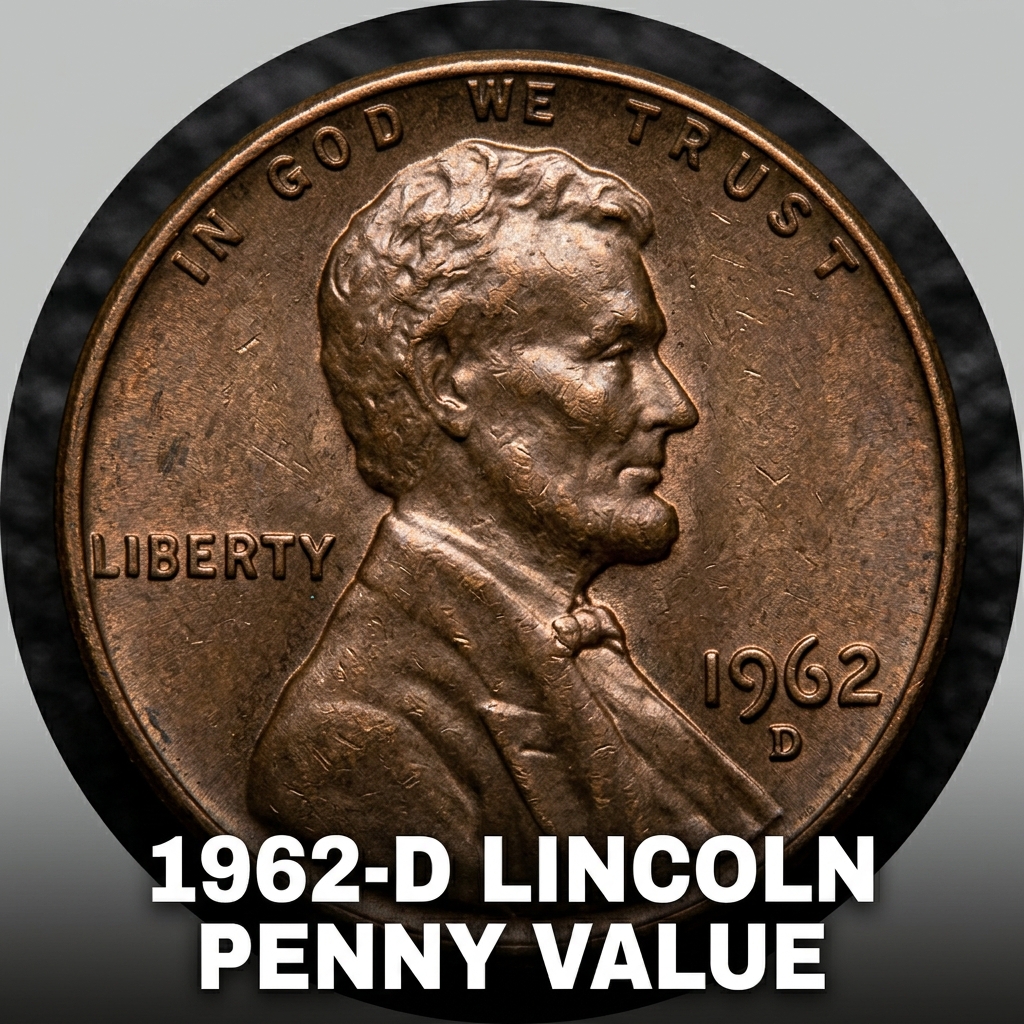
The 1962-D Lincoln Penny is worth anywhere from $0.05 in circulated condition to over $600 in high-grade mint state. Most of these copper coins found in pocket change today are valued for their metal content, but certain rare errors and pristine specimens can command a much higher price from collectors.
Understanding the Basics of your 1962 D Lincoln Cent
If you’ve just found a shiny penny from 1962 with a small “D” under the date, you are looking at a coin struck at the Denver Mint. In that year, the Denver Mint produced over 1.7 billion Lincoln Memorial cents, making it one of the most common coins in American history. However, common doesn’t always mean worthless. While the majority of these coins are only worth their weight in copper—roughly 2 to 3 cents—the market for high-quality strikes is thriving.
To get an accurate assessment of your pocket change, many collectors use a free coin identifier app to quickly determine the condition and mint mark of their finds. If you are serious about hunting for treasures, the CoinHix app is another fantastic resource that helps you track your collection and stay updated on the latest auction results.
Determining the Grade and Color of your 1962 D Penny
When evaluating the 1962 Lincoln cent value, the two most important factors are the coin’s grade and its color. Unlike silver coins, copper coins are categorized by their level of oxidation: Red (RD), Red-Brown (RB), and Brown (BN). A “Red” penny is one that still retains at least 95% of its original mint luster, appearing orange-gold. These are the most sought-after by professionals.
Brown coins are those that have seen heavy circulation and have turned a chocolatey color. While a Brown 1962-D penny is generally worth face value, a Red version in “Mint State” (MS) can be quite valuable. For example, the current market for a 1962-D RD Penny in MS67 grade shows that collectors are willing to pay hundreds of dollars for these preserved pieces of history.
The 1962 D Lincoln Penny Price Chart
To help you understand what your coin might be worth at a local coin shop or online auction, we have compiled a price guide based on the color and condition of the coin. Keep in mind that “MS” stands for Mint State, which refers to coins that have never been used in daily commerce.
| Condition / Grade | Brown (BN) Value | Red-Brown (RB) Value | Red (RD) Value |
|---|---|---|---|
| Circulated (Average) | $0.02 – $0.05 | N/A | N/A |
| Uncirculated (MS63) | $0.15 | $0.50 | $2.00 |
| Choice Mint State (MS65) | $1.00 | $5.00 | $15.00 |
| Superb Gem (MS67) | $25.00 | $85.00 | $600.00+ |
Valuable Errors to Look For in 1962 D Pennies
While standard 1962-D pennies are abundant, error hunters look for “minting mistakes” that occurred during the production process. The most famous for this year involve the mint mark. Look closely at the “D” below the date; some coins show a “D Over D” (Repunched Mint Mark), where the letter appears doubled. These varieties can add significant premium value to an otherwise common coin.
Other errors include “Die Cracks” or “Clipped Planchets,” where the coin blank was cut incorrectly. If you find a penny that looks “off” or has strange raised lines of metal, it’s worth checking with the CoinHix app to see if it matches known error types. Collectors often pay a premium for these unique manufacturing defects because they are rare survivors from the minting floor.
How to Sell or Store your 1962 D Lincoln Cent
If you’ve discovered a high-grade 1962-D penny, the first step is to avoid cleaning it. Cleaning a coin with chemicals or clothes can create micro-scratches that instantly destroy its numismatic value. Instead, handle the coin by its edges and place it in a protective PVC-free flip or a cardboard “2×2” holder. This preserves the original “Red” luster that contributes so much to its market price.
When you are ready to sell, you can look for local coin dealers, but online platforms often yield better results for specific grades. Using a tool like CoinHix can help you organize your inventory and determine if a coin is worth the cost of professional grading by services like PCGS or NGC. Remember that for a 1962-D penny to be worth hundreds, it must be in near-perfect condition with no visible scratches under a magnifying glass.
Frequently Asked Questions
Q: Is a 1962 D penny made of real copper?
A: Yes, all pennies minted in 1962 are composed of 95% copper and 5% tin and zinc. Because of this high copper content, they are worth more than their face value in melt weight, usually around 2 to 3 cents.
Q: What is the highest price ever paid for a 1962 D Lincoln Penny?
A: The record for a 1962-D penny is over $6,000 for a specimen graded MS67RD. This is exceptionally rare, as most coins from this era have some level of bag marks or spots that prevent them from reaching such a high grade.
Q: How can I tell if my 1962 penny is a “Red” coin?
A: A “Red” penny looks much like a brand-new penny does today—it has a bright, copper-orange glow. If the coin has any brown spots or has turned dark brown from use, it is classified as Red-Brown or Brown, which significantly lowers its collector value.