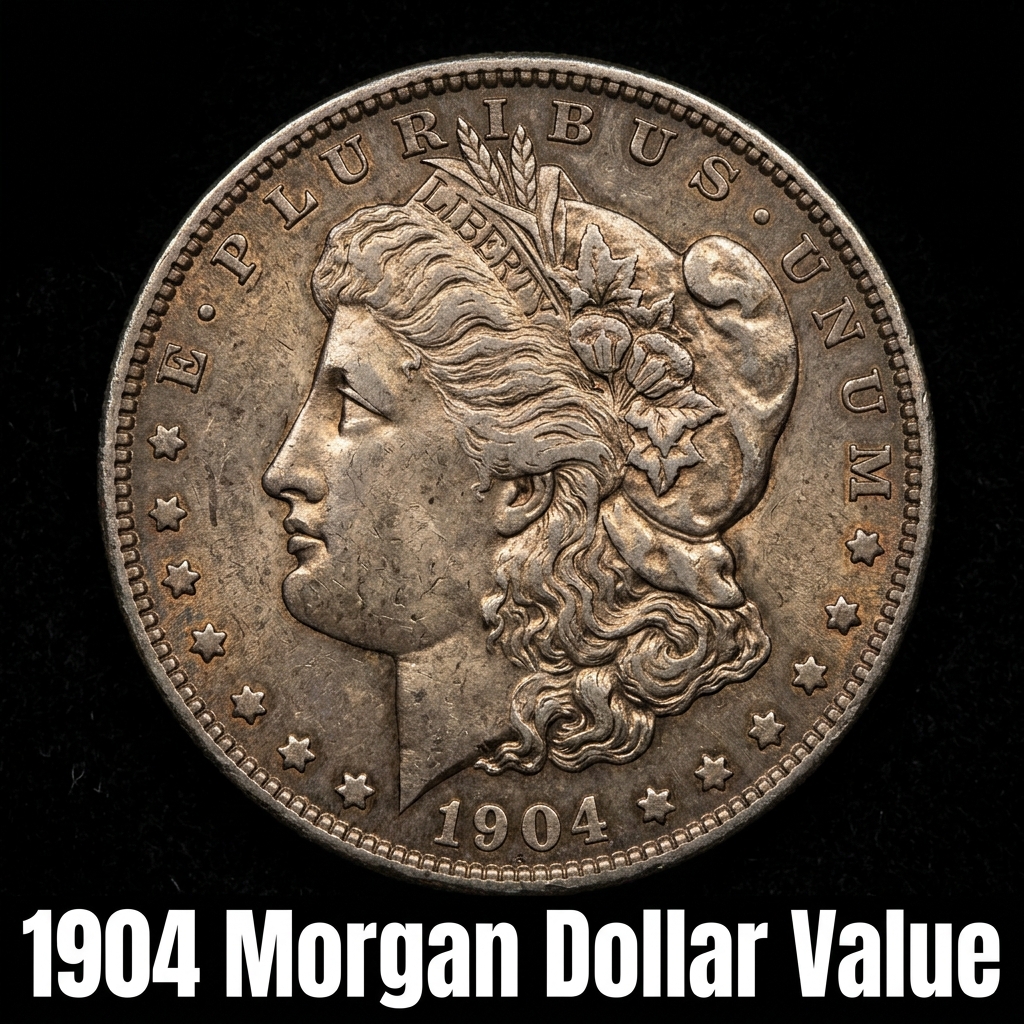
The 1904 Morgan Dollar is worth anywhere from $35 in worn condition to over $3,500 in high-grade mint state. This heavy silver coin represents the final year of the original Morgan production run, making it a favorite for history buffs and casual treasure hunters alike.
Understanding the History and Rarity of the 1904 Morgan Dollar
The 1904 Morgan Silver Dollar holds a special place in American history because it was intended to be the grand finale of the series. Due to the depletion of silver bullion supplies authorized by the Sherman Silver Purchase Act, the U.S. Mint ceased production of these iconic coins in 1904. It wasn’t until 1921 that the design would briefly return, making the 1904 issue the “last of the old guard.” For many everyday Americans, finding one of these in a drawer or an old jar is like holding a piece of the Wild West’s final chapter.
If you are unsure whether your coin is a genuine 1904 issue or a later reproduction, you can use a free coin identifier app to get an instant confirmation. Most 1904 dollars you encounter will show signs of wear from being used in daily commerce over a century ago. However, even “circulated” coins carry significant value because of their high silver content. Each coin contains roughly 0.7734 ounces of pure silver, though its numismatic (collector) value almost always exceeds the raw metal price. To get an accurate reading on your specific coin, the CoinHix app can help you analyze the surface details quickly.
How Mint Marks Affect the 1904 Silver Dollar Value
In 1904, three different mint facilities produced these silver dollars: Philadelphia, New Orleans, and San Francisco. Identifying which city minted your coin is the most important step in determining its worth. You can find the mint mark on the reverse side of the coin, just above the “DOLLAR” lettering and below the eagle’s wreath. If there is no letter there, your coin was minted in Philadelphia. Philadelphia coins are common but still highly sought after by those completing sets.
The New Orleans mint (marked with an “O”) produced the highest volume of these coins in 1904, making them generally the most affordable for new collectors. Conversely, the San Francisco mint (marked with an “S”) produced significantly fewer coins. An “S” mint mark can triple or quadruple the price of the coin compared to a Philadelphia or New Orleans version. If you want to see how these mint marks compare in real-time, checking the 1904 silver dollar market prices will show you the glaring difference in rarity.
Current Market Value and Pricing Breakdown
To help you understand what your coin might be worth, we have compiled a price guide based on the average condition. Remember that “Good” and “Fine” refer to coins that have been used and show wear, while “Uncirculated” refers to coins that look like they just came from the mint.
| Mint Mark & Condition | Good/Fine Condition | Extremely Fine | Uncirculated (MS60+) |
|---|---|---|---|
| 1904-P (No Mint Mark) | $35 – $45 | $65 – $80 | $200 – $600+ |
| 1904-O (New Orleans) | $35 – $42 | $55 – $70 | $150 – $450+ |
| 1904-S (San Francisco) | $120 – $250 | $450 – $900 | $2,500 – $15,000+ |
As you can see, the San Francisco (S) mint mark is the “big winner” for 1904. Many collectors use the CoinHix app to keep a digital inventory of their finds and track these fluctuating prices. For those looking for professional numismatic data, viewing the detailed 1904 Morgan Dollar price history can provide deeper insight into recent auction results.
Determining the Condition of Your 1904 Morgan Dollar
Coin grading is the process of evaluating how much wear a coin has sustained. For a 1904 Morgan Dollar, the first places to look for wear are Lady Liberty’s cheek and the lines in her hair above her ear. On the reverse side, look at the eagle’s breast feathers. If the feathers are flat and smooth, the coin is in “circulated” condition. If the feathers are crisp and you can see individual strands, you might have a high-value “uncirculated” coin.
Many beginners make the mistake of cleaning their coins to make them look “shinier.” Never do this! Cleaning a vintage silver dollar with chemicals or cloths ruins its numismatic value and can turn a $500 coin into a $35 coin instantly. If your coin looks dull or dark, leave it as it is. Collectors prefer the natural “patina” or toning that comes with age. Before you consider selling or grading, use CoinHix to compare your coin’s appearance with high-resolution images of certified grades to see where yours fits in.
Frequently Asked Questions about 1904 Morgan Dollars
Q: Is the 1904 Morgan Silver Dollar made of real silver?
A: Yes, it is composed of 90% silver and 10% copper. This was the standard for silver dollars of that era to ensure they were durable enough for circulation while maintaining precious metal value.
Q: Where is the mint mark located on a 1904 silver dollar?
A: The mint mark is found on the reverse (back) of the coin. Look at bottom center, right above the “D” and “O” in the word “DOLLAR.” You will see an “O,” an “S,” or no letter at all (Philadelphia).
Q: Why is the 1904-S so much more expensive than the 1904-O?
A: It comes down to supply and demand. The New Orleans mint produced over 3.7 million coins in 1904, while San Francisco only produced 2.3 million. More importantly, far fewer 1904-S coins survived in high-grade condition, making them very rare today.