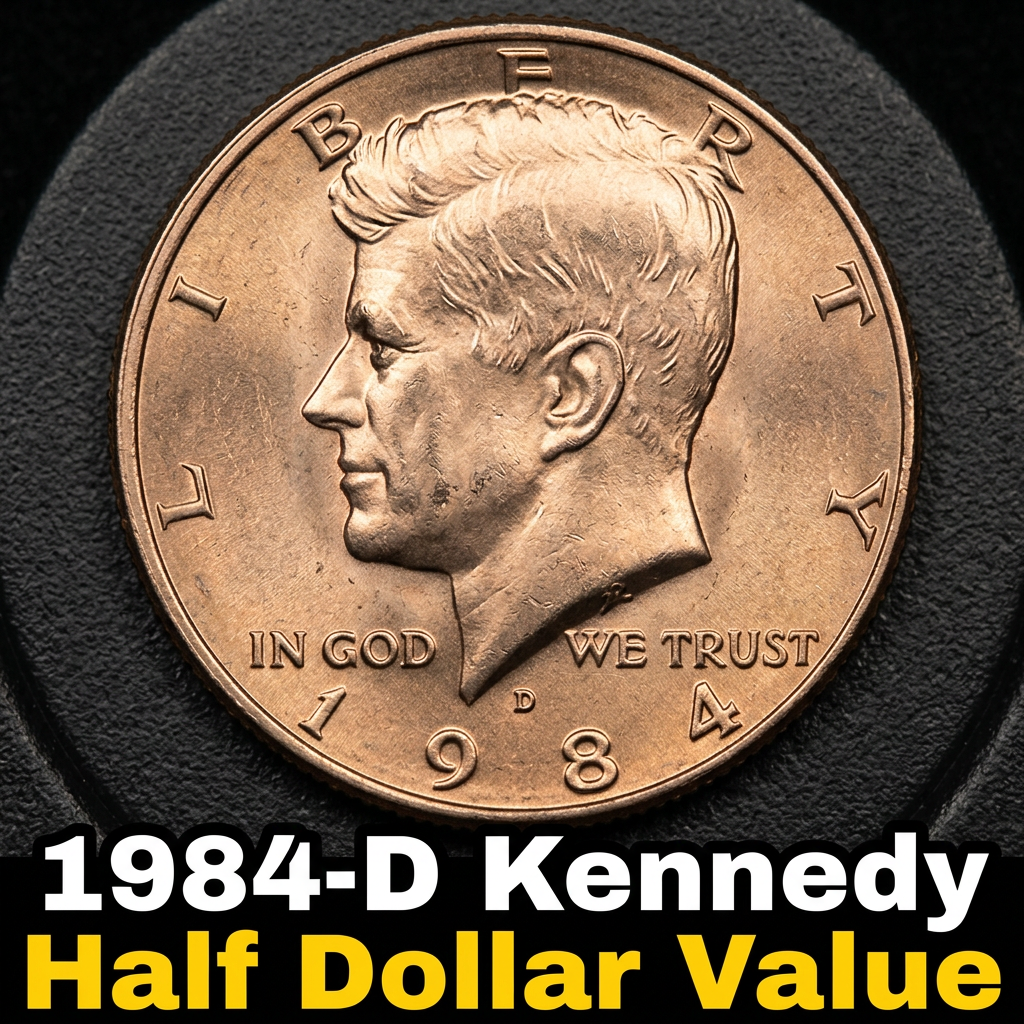
The 1984 D Kennedy Half Dollar is worth anywhere from its face value of $0.50 in worn condition to over $1,500 in high-grade mint state. Whether you found one in a jar of old change or inherited a small collection, understanding its real market value is the first step in your numismatic journey.
The Basics of the 1984 D Kennedy Half Dollar
By 1984, the United States Mint was pumping out millions of Kennedy Half Dollars for general circulation. The “D” mint mark located on the obverse, just above the date, indicates that this specific coin was struck at the Denver Mint. Unlike the earlier versions from the 1960s, these coins are made of a copper-nickel clad composition and do not contain any silver. Because they were produced in large quantities—over 26 million at the Denver facility alone—most examples you find in your pocket today are only worth their face value.
However, condition is everything in the world of coin collecting. While a circulated coin might only buy you a soda, a pristine, uncirculated specimen can be a different story entirely. If you aren’t sure how to grade your find, you might want to use a free coin identifier app to get a better sense of its preservation level. Many newcomers find that using the CoinHix app helps them distinguish between a common coin and a potential treasure by analyzing surface marks and luster.
Understanding 1984 D Kennedy Half Dollar Market Prices
When determining the price of a 1984 D half dollar, professional collectors look at the Sheldon Scale, which ranges from 1 to 70. Most coins found in circulation grade between Very Fine (VF) and About Uncirculated (AU). At these levels, the coin usually fetches its face value of 50 cents, perhaps slightly more if a collector is looking to fill a specific hole in a budget album. The real value jump occurs when you reach Mint State (MS) 65 and above.
While the Denver mint was generally consistent, finding a 1984 coin without scratches or “bag marks” from the minting process is challenging. To get a better idea of what these coins sell for at auction, you can check the current 1984 half dollar price guide for detailed auction records. These records show that while standard coins are common, those in top-tier condition are rare and highly sought after by registry set builders.
| Condition Grade | Estimated Market Value |
|---|---|
| Circulated (Good to AU) | $0.50 – $0.75 |
| Uncirculated (MS60 – MS63) | $1.00 – $5.00 |
| Choice Uncirculated (MS65) | $15.00 – $30.00 |
| Superb Gem (MS67+) | $350.00 – $1,500.00+ |
Valuable Errors and Varieties to Watch For
Sometimes, the value of a 1984 D Kennedy Half Dollar isn’t just about how shiny it is, but about the mistakes made during its creation. Error coins are a favorite among “everyday” treasure hunters because they can turn a common coin into a high-value item. Look for “doubled die” errors, where the lettering or the date appears to be doubled. While no major doubled die thrives for the 1984-D, minor mechanical doubling is frequent but adds little value.
Another thing to look for is “clipping” errors or “off-center” strikes. These occur when the coin blank isn’t aligned correctly with the dies. If you think you’ve found a rare error, the CoinHix mobile tool can be an excellent resource for comparing your coin against known error databases. For a comprehensive breakdown of what makes these specific years special, you can read more about the 1984 Kennedy Half Dollar worth and rarity.
How the Denver Mint Mark Influences Rare Coin Worth
In the 1980s, the Denver Mint (D) and the Philadelphia Mint (P) were the primary producers of coins for circulation. Generally, the Denver Mint produced slightly more half dollars than Philadelphia in 1984. However, the quality of strikes can vary between the two locations. Some collectors believe that Denver strikes from this era have a slightly better luster, though Philadelphia coins in high grades can sometimes be scarcer.
If you are sorting through a large stash of coins, keep an eye out for any 1984 Kennedy halves that look exceptionally “frosty” or have very few surface scratches. These “Gem” quality coins are the ones that professionals send to grading services like PCGS or NGC. Before spending money on grading fees, which can be expensive, using an app like CoinHix can help you determine if your coin is a candidate for professional certification or if it’s better left in its current state.
Q: Is the 1984 D Kennedy Half Dollar made of silver?
A: No, the 1984 D half dollar is a clad coin made of 75% copper and 25% nickel. The last Kennedy half dollars intended for circulation that contained silver were minted in 1969.
Q: What is the highest price ever paid for a 1984 D half dollar?
A: Highly graded specimens in MS67 condition have sold for over $1,500 at major auctions. Most coins, however, are worth much closer to their 50-cent face value.
Q: Where can I find the mint mark on my 1984 half dollar?
A: The mint mark is located on the front (obverse) of the coin, just above the “1984” date. A “D” stands for Denver, while a “P” stands for Philadelphia.