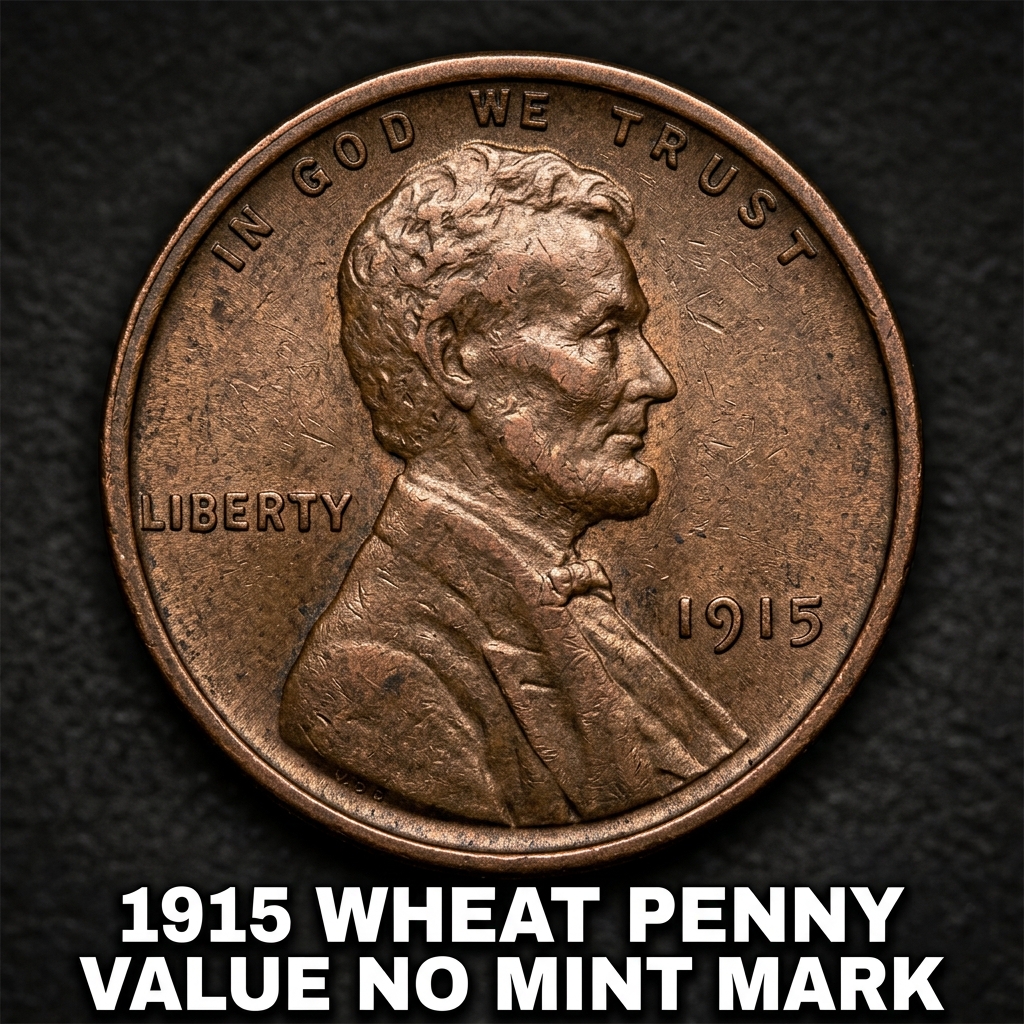
The 1915 Wheat Penny is worth anywhere from $1 in worn condition to over $350 in mint state. Finding one of these century-old copper coins in your pocket change or an old jar is an exciting moment, as it represents a piece of American history from the early days of the Lincoln Cent series.
Understanding the Value of a 1915 Penny With No Mint Mark
If you have found a 1915 penny and notice there is no small letter “S” or “D” beneath the date, your coin was minted in Philadelphia. Back then, the Philadelphia Mint was the main production facility and did not use a mint mark on its pennies. While over 29 million of these were struck, finding one today in decent shape is becoming increasingly difficult. For the average person, the price depends heavily on the level of detail remaining on Lincoln’s portrait and the wheat stalks on the reverse.
To get an instant answer on what your specific coin might be worth, you can use a free coin identifier app to evaluate the condition. Most circulated 1915 pennies you find will be in “Good” or “Fine” condition, selling for a few dollars. However, if the coin looks like it just came from the bank—retaining its original red luster—the value jumps significantly. Using the CoinHix app can help you distinguish between a common brown coin and a rare red gem.
1915 Wheat Penny Price Chart by Condition Grade
The numismatic market categorizes coins by their wear and tear. A brown (BN) coin is common, while Red-Brown (RB) or Red (RD) coins are highly sought after by serious collectors. Because 1915 was a lower-mintage year compared to the 1920s, even mid-grade circulated coins hold a premium over their face value.
| Condition Grade | Estimated Value (USD) |
|---|---|
| Good (G-4) | $1.25 – $2.00 |
| Fine (F-12) | $4.00 – $6.00 |
| Extremely Fine (EF-40) | $15.00 – $25.00 |
| Uncirculated (MS-63 Brown) | $65.00 – $85.00 |
| Uncirculated (MS-65 Red) | $350.00+ |
How to Rate Your 1915 Lincoln Cent Without a Mint Mark
Grading is the most important factor in determining the 1915 penny value in today’s market. Collectors look for specific details: on the front (obverse), look at Lincoln’s cheekbone and jawline. If they are completely flat, the coin is in “Good” condition. If you can see the lines in his hair, you have a much more valuable “Fine” or “Very Fine” specimen.
On the back (reverse), check the wheat ears. If the lines at the top of the stalks are clear and not merged together, your coin is worth a premium. You can check the 1915 penny MS65 Red price trends to see how the highest quality versions of this coin have performed at auction recently. Many users find that the CoinHix app photo-grading feature simplifies this process, removing the guesswork for beginners.
Factors That Influence the Worth of Your 1915 Penny
Beyond standard wear, “eye appeal” matters. A 1915 penny with deep chocolate color and no scratches is worth more than one with dark spots or green corrosion. Many collectors prefer the “Philadelphia strike” because the dies used in 1915 often produced sharper details than the branch mints in Denver or San Francisco.
Errors can also boost the value. Keep an eye out for “doubled dies,” where the lettering or the date looks like it was stamped twice. While 1915 isn’t known for a major hub doubling like the famous 1955 penny, minor varieties still exist that can turn a $2 coin into a $20 coin. Before you sell your collection to a local shop, use CoinHix to scan for these subtle details so you don’t leave money on the table.
FAQ: Common Questions About the 1915 Philadelphia Penny
Q: Why doesn’t my 1915 penny have a mint mark?
A: In 1915, the Philadelphia Mint produced all its coins without a mint mark. This was standard practice for the main US Mint facility until the late 20th century.
Q: Is a 1915 penny rare?
A: It is considered a semi-key date. While not as rare as the 1909-S VDB, it is much harder to find than pennies from the 1940s or 50s, making it a “keeper” for most people.
Q: Should I clean my 1915 Wheat Penny to make it worth more?
A: No! Never clean your coins. Cleaning removes the original surface and significantly lowers the value to collectors. It is always better to keep it in its original, aged condition.