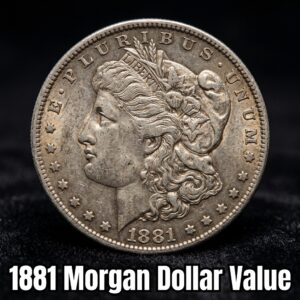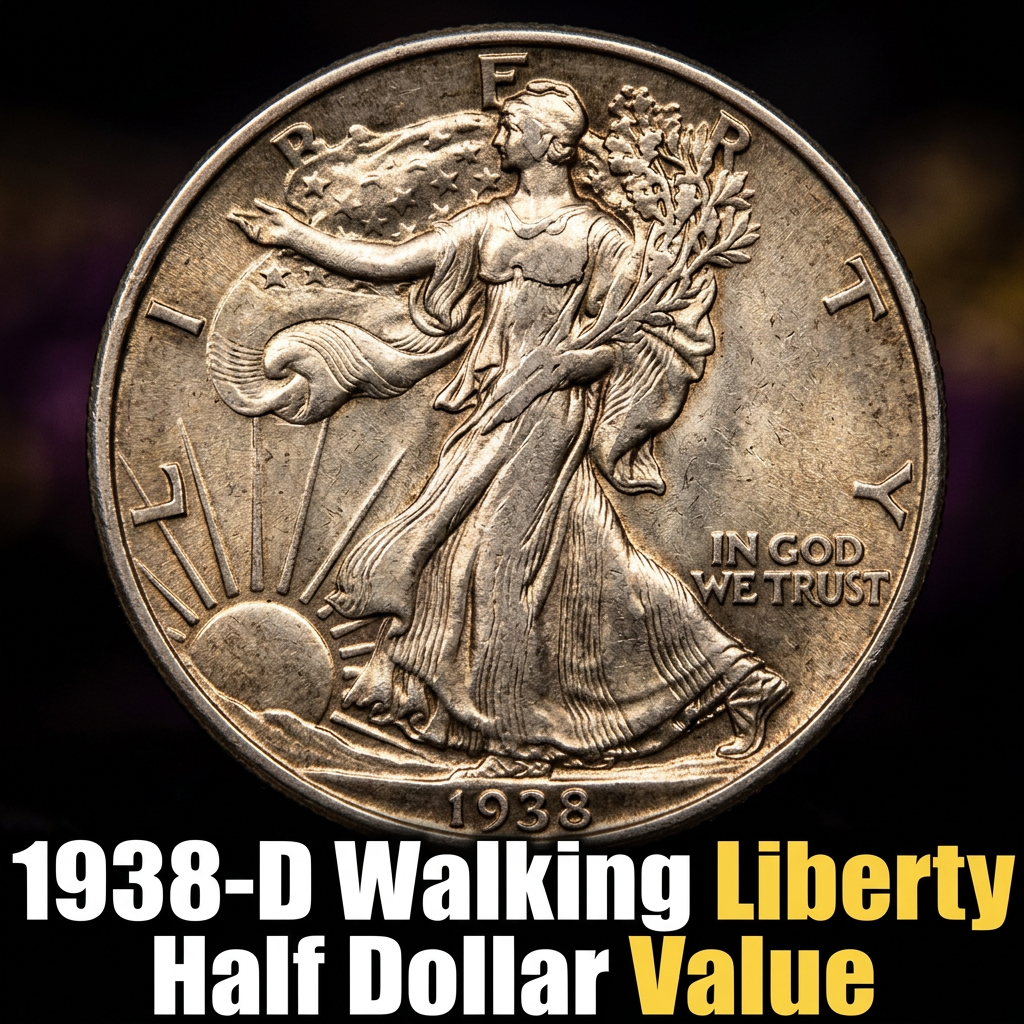
The 1938-D Walking Liberty Half Dollar is worth anywhere from $50 in worn condition to over $600 in mint state. This specific coin is a favorite among collectors because it represents one of the lowest mintage years in the entire series, making it a “semi-key date” that holds its value remarkably well.
Why the 1938-D Half Dollar Is a Rare Treasure
If you just found a 1938-D half dollar in an old family collection, you should know that you are holding a piece of American history with a very limited supply. During the Great Depression era, the Denver Mint produced only 491,600 of these coins. To put that in perspective, many other years saw production in the millions. Because so few were made, this coin is significantly more valuable than common dates you might find. If you are unsure if your coin is the rare Denver version, you can use a free coin identifier app to confirm the “D” mint mark located on the reverse side of the coin.
When demand for silver was low and the economy was struggling, the mint simply didn’t need to produce as many half dollars. Today, that historical fluke translates into a high market price. Even in heavily circulated condition, a 1938-D rarely sells for less than fifty dollars, which is a massive premium over its melt value. Many people use the CoinHix app to track these price fluctuations in real-time to ensure they don’t sell their treasures for too little.
Decoding the Condition and Mint State Value
Collectors categorize coin values based on “grades.” A coin that has been carried in a pocket for years will have smoothed-out feathers on the eagle’s breast and a blurred face on Lady Liberty. However, if your coin still has its original luster and sharp details, the value skyrockets. For those lucky enough to own an uncirculated specimen, checking the 1938-D Walking Liberty Half Dollar MS price guide is the best way to see how much a professional grading could increase your profit.
The difference between a “Good” condition coin and an “Extra Fine” one can be hundreds of dollars. Because the 1938-D is so scarce, even small improvements in quality lead to large jumps in price. It is always wise to keep your coin in a protective sleeve to prevent further wear. Many users of CoinHix report that having a digital inventory of their coins helps them monitor which pieces are worth professional certification by services like PCGS or NGC.
| Condition / Grade | Estimated Market Value |
|---|---|
| Good (G-4) | $45 – $55 |
| Fine (F-12) | $65 – $80 |
| Extremely Fine (XF-40) | $110 – $140 |
| About Uncirculated (AU-50) | $175 – $225 |
| Mint State (MS-63) | $450 – $550 |
| Choice Mint State (MS-65+) | $850+ |
Identifying the Correct Mint Mark and Varieties
To verify you have the valuable 1938-D, turn the coin to the back (the reverse side). Look at the bottom left area near the rim, just below the olive branch. If you see a small “D,” you have the Denver mint version. If there is no letter at all, it was minted in Philadelphia. While the Philadelphia version is still a great coin, it is significantly more common and generally worth less than the Denver variety. You can find more detailed 1938 half dollar value info to help distinguish between these two versions.
The design itself is widely considered the most beautiful in American coinage. Created by Adolph A. Weinman, it features Lady Liberty walking toward the sun, draped in the American flag. On the reverse, a powerful eagle stands on a mountain crag. Because the 1938-D has such a low mintage, collectors often look for “full thumb” or “full strike” versions where Liberty’s hand and the eagle’s feathers are perfectly defined. These rare attributes can push the 1938-D Walking Liberty Half Dollar Value into the thousands at major auctions.
The Long Term Investment Potential of Walking Liberties
Unlike modern coins that are minted by the billions, the supply of 1938-D halves is fixed and shrinking as coins are lost or damaged over time. This makes them a solid “blue-chip” investment for casual collectors. As more people enter the hobby, the demand for this key date rises, but the supply remains under half a million units. If you are starting a collection, the CoinHix app is a great way to discover which other dates in the series have similar growth potential.
Whether you found this coin in a drawer or inherited it from a grandparent, it is worth more than its weight in silver. While the silver content alone is worth about $10-$12, the “numismatic” or collector value is what really makes the 1938-D special. Always consult with a reputable dealer or use a high-quality valuation app before deciding to sell, as many people accidentally underprice this specific Denver-minted gem.
Frequently Asked Questions
Q: Does the 1938 Walking Liberty Half Dollar contain real silver?
A: Yes, all Walking Liberty Half Dollars minted between 1916 and 1947 are made of 90% silver and 10% copper.
Q: What is the most expensive 1938-D half dollar ever sold?
A: High-grade examples in MS-67 condition have sold for over $20,000 at auction, though most found in homes are in the $50 to $200 range.
Q: Where is the mint mark located on the 1938-D coin?
A: The “D” mint mark is located on the reverse (back) of the coin, on the lower left side near the rim, underneath the eagle’s branch.