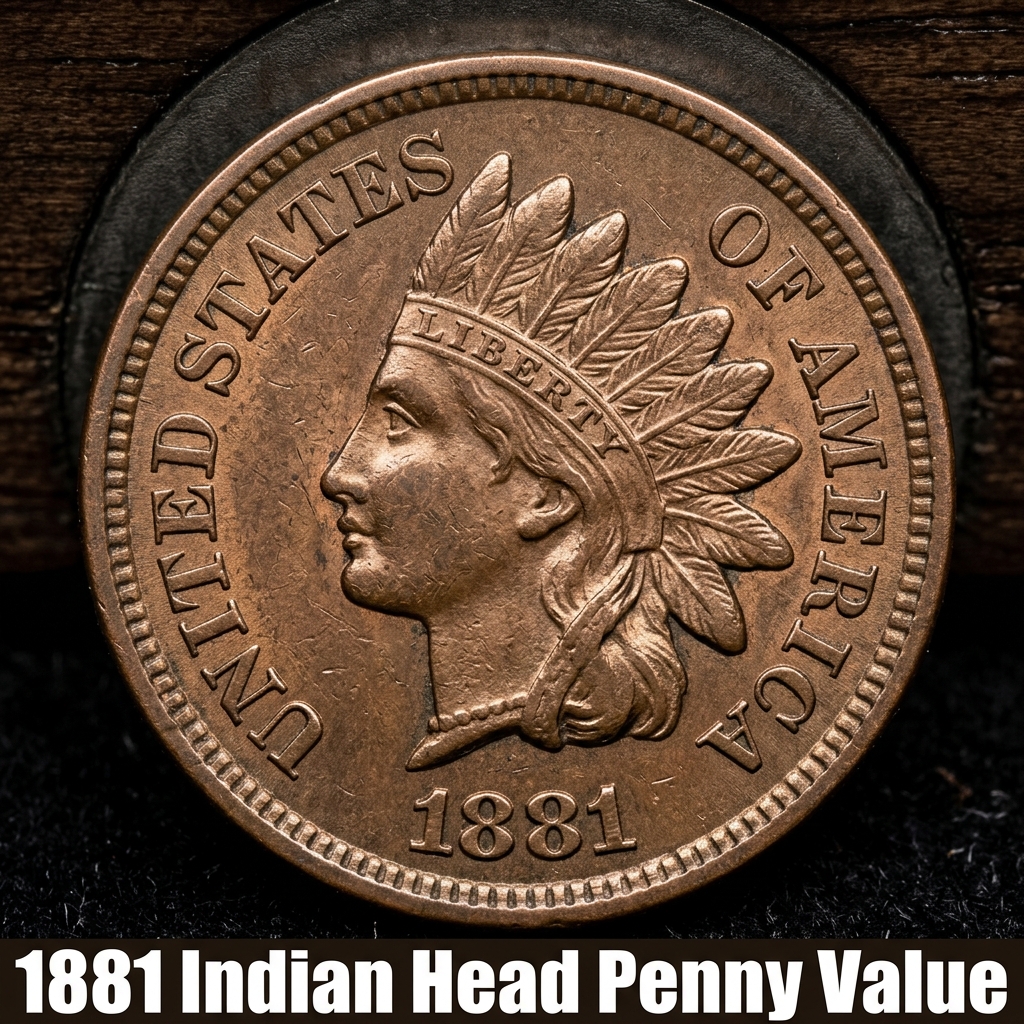
The 1881 Indian Head Penny is worth anywhere from $3 in worn condition to over $1,500 in high-grade mint state. Finding one of these bronze treasures in your pocket change or an old jar is an exciting moment for any collector or casual hobbyist looking to uncover a piece of American history.
What Makes the 1881 Indian Head Penny Special
The 1881 Indian Head Penny comes from an era when the United States was rapidly expanding and industrializing. Unlike modern pennies made primarily of zinc, this coin is composed of 95% copper, giving it a distinct weight and a beautiful reddish-brown patina over time. If you have recently discovered one, you might be wondering about its specific market price. Using a free coin identifier app can help you quickly determine which variety you have.
While the Philadelphia Mint produced over 39 million of these coins, surviving examples in great condition are becoming increasingly rare. Most 1881 cents you find today will show significant wear on Lady Liberty’s headdress. However, if the feathers and the word “LIBERTY” are still crisp and clear, you could be looking at a coin worth a significant premium. To get an instant estimate on your phone, many collectors turn to the CoinHix app for real-time market data and image recognition.
Determining the Grade and Condition of Your 1881 Cent
In the world of coin collecting, condition is everything. Numismatists use a 70-point scale to grade coins. For an 1881 Indian Head Penny, even a small difference in detail can mean a difference of hundreds of dollars. “Good” condition coins are heavily worn but readable, while “Fine” coins show some detail in the feathers. If your coin looks like it just came from the mint with its original luster, it is considered “Uncirculated” or “Mint State.”
Finding a specimen that has retained its original copper glow is the goal for many investors. You can check the current market trends for an 1881 Indian Head Penny in Mint State Red condition to see how much these pristine examples fetch at auction. For those just starting out, the CoinHix app provides a user-friendly way to compare your coin against high-resolution grading photos, making it easier to spot the difference between a $10 coin and a $100 coin.
1881 Indian Head Penny Value Chart
To help you understand the current market, we have compiled a price guide based on standard coin grades. These prices reflect recent auction results and retail trends for the 1881 Indian Head cent.
| Condition / Grade | Estimated Market Value |
|---|---|
| Good (G-4) | $3.00 – $5.00 |
| Fine (F-12) | $8.00 – $12.00 |
| Extremely Fine (EF-40) | $25.00 – $40.00 |
| About Uncirculated (AU-50) | $55.00 – $85.00 |
| Uncirculated (MS-63) | $150.00 – $250.00 |
| Gem Mint (MS-65 Red) | $1,200.00+ |
Key Factors Influencing 1881 Penny Prices
Several factors beyond basic wear influence the final price of an 1881 penny. One of the most important factors for copper coins is the color. Collectors classify these coins as Brown (BN), Red-Brown (RB), or Red (RD). A “Red” coin is one that still has at least 95% of its original mint orange-red color. These are exceptionally rare for 1881 and command the highest prices.
Additionally, you should look for “Proof” versions. The mint produced a small number of 1881 Proof coins specifically for collectors. These have mirror-like backgrounds and very sharp strikes. While a standard circulated penny is affordable, an 1881 Indian Head Penny worth high premiums is usually one that has been professionally graded by services like PCGS or NGC. Before spending money on professional grading, using the CoinHix app can give you a baseline idea of whether your coin is worth the authentication fee.
How to Identify and Store Your Old Coins
If you find an 1881 Indian Head Penny, the first rule is: never clean it! Cleaning a coin with chemicals or even a soft cloth can leave microscopic scratches that destroy its numismatic value. A cleaned coin can lose over 50% of its market price instantly. Instead, handle the coin by its edges and place it in a PVC-free plastic flip or a cardboard “2×2” holder to protect it from moisture and skin oils.
Understanding the history and the potential payout of these coins turns a simple hobby into a rewarding treasure hunt. Whether you are looking through a collection passed down from a relative or searching through estate sales, knowing the 1881 Indian Head Penny value ensures you won’t accidentally spend a small fortune at the grocery store. Keep learning about your coins and stay updated on the latest price shifts to make the most of your collection.
Frequently Asked Questions
Q: Where is the mint mark on an 1881 Indian Head Penny?
A: The 1881 Indian Head Penny does not have a mint mark. During this era, all Indian Head cents were struck at the Philadelphia Mint. If it were a later date like 1908 or 1909, you might find an “S” for San Francisco on the back, but for 1881, they are all from Philadelphia.
Q: Is the 1881 Indian Head Penny made of real gold?
A: No, the 1881 penny is made of 95% copper and 5% tin and zinc. While its “Red” mint luster can sometimes look golden to the untrained eye, it is a bronze coin. Its value comes from its age, rarity, and condition rather than its metal content.
Q: How can I tell if my 1881 penny is a rare error coin?
A: Look for “doubled dies,” where the lettering or the date appears to have a shadow or a second image. While 1881 isn’t famous for major errors like the 1873 “Doubled LIBERTY,” minor die cracks and rotations occur. Use a magnifying glass or a high-quality coin app to inspect the details closely.