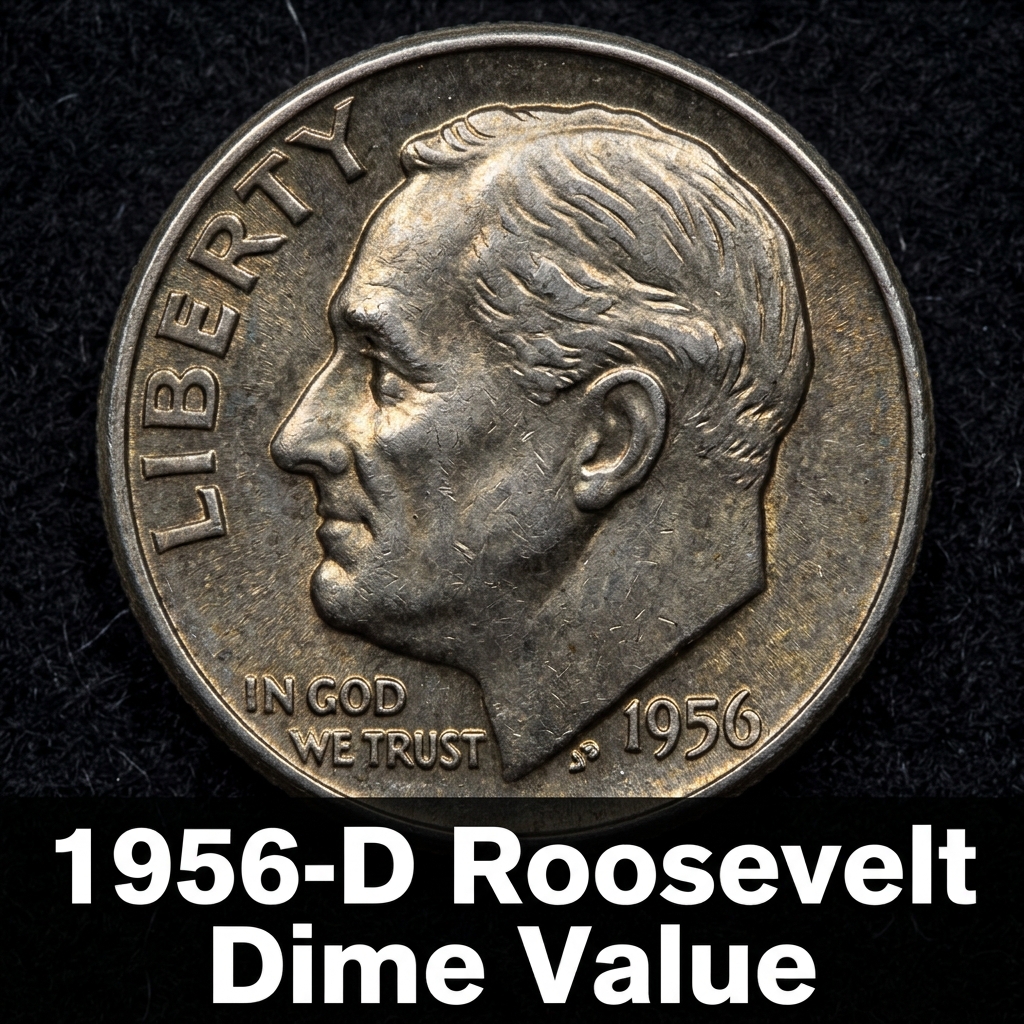
The 1956-D Roosevelt Dime is worth anywhere from $2.50 in worn condition to over $35 for high-quality uncirculated examples. If you have stumbled upon one of these silver coins in an old jar or inherited a collection, you are holding a piece of American history that is worth significantly more than its ten-cent face value.
Understanding the Silver Content and Market Demand
One of the most exciting aspects of finding a 1956-D Roosevelt Dime is that it belongs to the era when American coinage was made of precious metal. Unlike the dimes we use today, which are made of copper and nickel, this 1956 issue is composed of 90% silver and 10% copper. This intrinsic value serves as a “floor” for the coin’s price; even if the coin is heavily scratched or worn, it will always be worth its weight in silver. Because of this, many people use a free coin identifier app to quickly check if their loose change contains silver coins from before 1965.
While the Denver Mint (indicated by the “D” mint mark) produced over 100 million of these dimes, finding them in circulation today is becoming increasingly rare. Most have been pulled out by collectors or investors over the decades. If you are unsure whether your coin is a common Denver strike or a more valuable variety, using a tool like CoinHix can help you distinguish the subtle details that professional numismatists look for.
How to Identify the 1956 D Roosevelt Dime
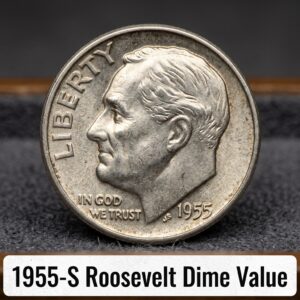
To confirm you have a 1956-D Roosevelt Dime, you need to look at both sides of the coin. The obverse (front) features the profile of President Franklin D. Roosevelt, while the reverse (back) depicts a torch flanked by an olive branch and an oak branch. The “D” mint mark, which signifies it was minted in Denver, is located on the reverse side. You will find it just to the left of the base of the torch.
The condition of the coin, or its “grade,” is the most significant factor in determining its ultimate price. A coin that looks shiny and new, as if it just left the mint, is referred to as “Uncirculated” or “Mint State.” These are the specimens that fetch the highest prices at auction. If you want to see how grade affects the market, you can check the current 1956 Roosevelt Dime mint state prices to see the jumps in value for higher-quality coins.
1956 D Roosevelt Dime Value Price Chart
The following table provides an estimate of what you can expect to receive for a 1956-D dime based on its condition. Please note that market prices for silver fluctuate daily, which can impact the lower-end values.
| Condition / Grade | Estimated Value |
|---|---|
| Good (G-4) to Fine (F-12) | $2.10 – $2.50 |
| Extremely Fine (XF-45) | $3.00 – $4.00 |
| About Uncirculated (AU-50) | $5.00 – $7.00 |
| Mint State (MS-63) | $10.00 – $15.00 |
| Mint State (MS-65 Gems) | $25.00 – $40.00 |
| Full Band (FB) Specimens | $50.00+ |
Factors That Increase the 1956 Denver Dime Value
While most 1956-D dimes are affordable, some specific traits can send the value skyrocketing. Collectors are particularly obsessed with “Full Bands” (FB). On the reverse of the dime, the torch has horizontal bands at the top and bottom. If these bands are perfectly separated with no blurring or wear, the coin is designated as FB. A 1956-D with Full Bands is much rarer and can sell for a significant premium.
Beyond standard grades, error coins are also highly sought after. Look for “doubled die” errors, where the lettering or the date appears to have a shadow or a double image. These errors are rare but can turn a $3 coin into a $100 treasure. For a comprehensive look at these variations, you can research the 1956 silver dime value guide to see images of what to look for. Using CoinHix is another great way to compare your coin against high-resolution images of known errors to see if you have struck gold—or in this case, valuable silver.
Preserving Your Coin for Future Value
If you find a 1956-D Roosevelt Dime that looks particularly clean and shiny, the most important thing to do is not to clean it. Many beginners make the mistake of using silver polish or soap to make the coin “look better.” However, cleaning a coin leaves microscopic scratches that professional graders can easily spot, and it can instantly reduce a coin’s numismatic value by 50% or more.
Instead, handle the coin by the edges to avoid getting finger oils on the surface. Place it in a PVC-free plastic flip or a simple cardboard “2×2” holder. This preserves the “original skin” of the silver, which is exactly what collectors want to see. As you build your collection, tools like CoinHix can help you keep a digital inventory of your finds so you always know the current market value of your silver hoard.
Frequently Asked Questions about the 1956-D Dime
Q: How can I tell if my 1956 dime is silver?
A: Look at the edge of the coin. If you see a solid silvery-white color, it is 90% silver. If you see a sandwich-like brown or copper stripe, it is a modern clad coin (though all 1956 dimes should be silver). Also, silver dimes have a distinct higher-pitched “ring” when dropped gently on a hard surface compared to modern coins.
Q: Is the “D” mint mark better than no mint mark on a 1956 dime?
A: Generally, the values are quite similar for both the Philadelphia (no mint mark) and Denver (D) coins in lower grades. However, the Denver Mint produced significantly more coins in 1956, so the Philadelphia version is slightly harder to find in some uncirculated grades.
Q: Where is the best place to sell my 1956-D Roosevelt Dime?
A: For common worn silver dimes, a local coin shop or a reputable bullion dealer is often the easiest path. If you believe your coin is in exceptional condition (MS-65 or higher), you might consider selling through an online auction or a dedicated numismatic marketplace to reach collectors willing to pay a premium.